When several balances are due at once, keeping track of them can become overwhelming. Debt consolidation means combining some existing debts into a new loan or payment arrangement.
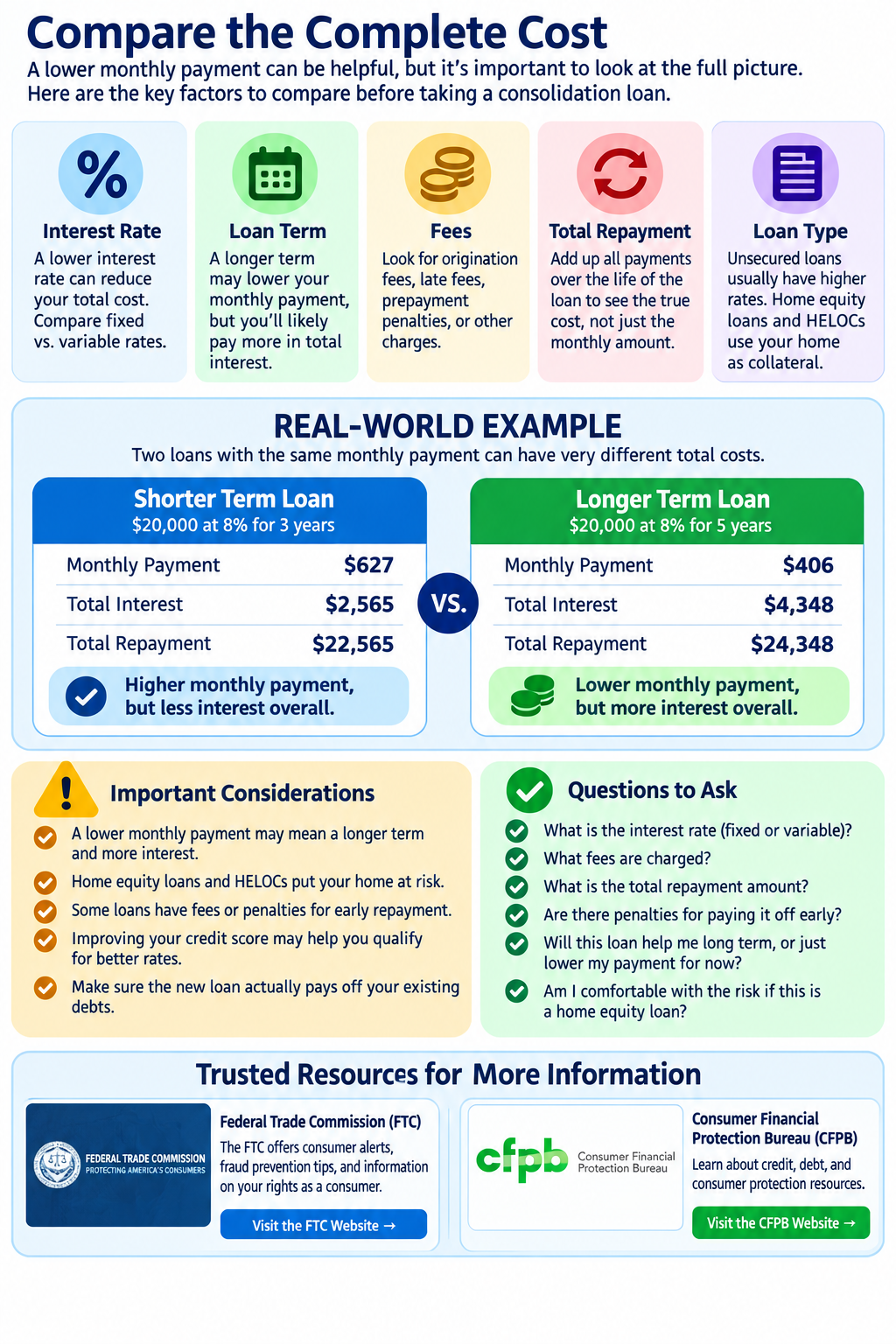
A consolidation loan does not erase debt. It replaces existing obligations with new repayment terms. Whether it helps depends on the interest rate, fees, repayment period, and your ability to keep up with payments.
How debt consolidation may work
You may use a personal loan to pay off eligible credit-card or other unsecured balances, then make payments on the new loan. Some people also consider balance-transfer credit cards. These approaches have different qualifications, costs, and risks.
When might it be worth exploring?
- You have multiple high-interest balances and can qualify for meaningfully better terms.
- You can afford the new payment without relying on additional borrowing.
- You understand the full repayment cost, including origination fees and promotional-rate expiration dates.
- You have a plan to avoid rebuilding balances on paid-off credit cards.
Compare the complete cost
Be especially careful with home-secured borrowing
A home-equity loan or line of credit may have different pricing from an unsecured personal loan, but it also puts your home at risk if you cannot repay. Think carefully before using home equity to pay credit-card or other unsecured debt.
Reputable places to begin
Consumer Financial Protection Bureau
Explore consumer guidance on credit cards, borrowing, and comparing financial products.
Explore CFPB credit resources →
Federal Trade Commission
Review practical information about getting out of debt and avoiding misleading debt-help claims.
Read FTC debt guidance →Warning signs to watch for

Before agreeing to a loan, verify the lender, review the complete repayment terms, and be especially cautious about requests for sensitive banking information.
Explore the other paths
Consolidation is only one possible approach. Credit counseling, direct creditor hardship programs, and other options may fit different circumstances.
Review the Five Options